
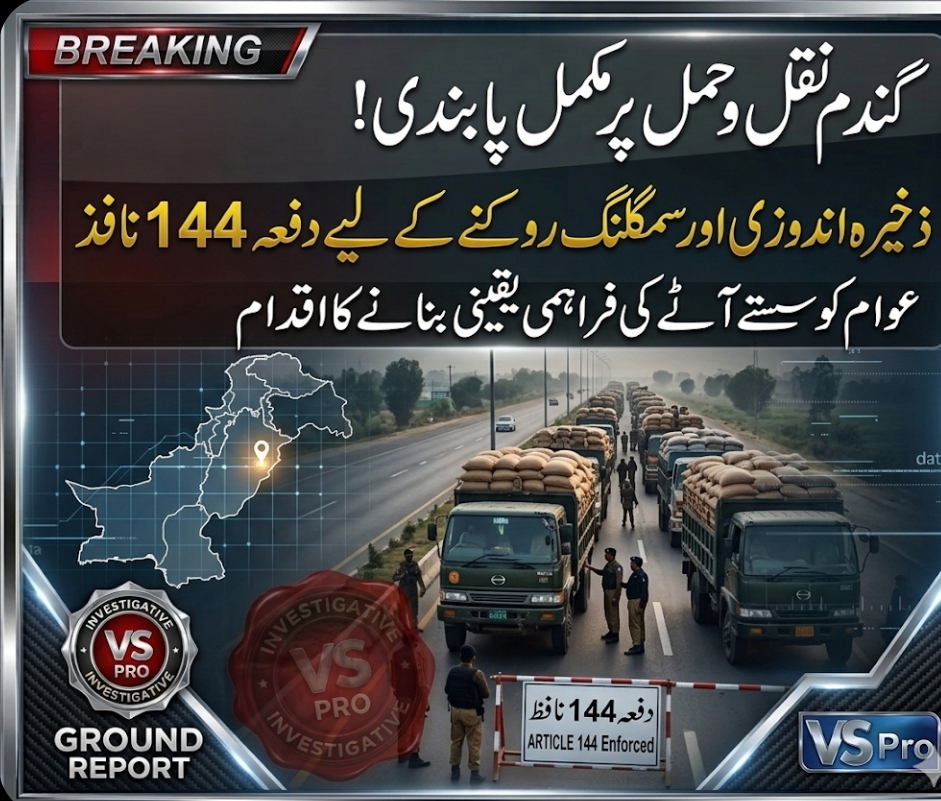
Government Imposes Section 144 on Wheat Movement to Curb SmugglingISLAMABAD / LAHORE – In a strategic move to ensure food security and streamline the 2026 procurement drive, the government has imposed Section 144, strictly banning the inter-district and inter-provincial transportation of wheat across several key regions.The decision comes as authorities aim to meet official procurement targets while preventing the illegal hoarding and smuggling of the essential commodity to neighboring countries.Strict Enforcement & MonitoringUnder the newly enforced Section 144, the following measures are now in effect:Inter-District Ban: Private movement of wheat between districts is prohibited without official permits.Checkpoint Activation: Special police and administrative “nakas” (checkpoints) have been established at all entry and exit points of major wheat-producing hubs.Vehicle Seizure: Any vehicle found transporting wheat in violation of these orders will be confiscated, and the owners will face heavy fines or imprisonment.Addressing the 2026 Wheat CrisisThe ban follows a period of significant debate over the Wheat Policy 2026. While the Punjab government recently shifted toward a private-sector-led procurement model, administrative intervention remains high to stabilize prices and ensure that flour mills have adequate stocks.Local farmers, however, have expressed concerns, citing that movement restrictions often leave them at the mercy of middlemen and private buyers when government procurement centers are slow to respond.
Impact on the General Public
The administration maintains that these “tough measures” are essential to:
- Stabilize Flour Prices: By keeping the wheat within provincial boundaries, the government hopes to avoid artificial shortages.
- Ensure Availability: Prioritizing supply to local flour mills to keep the “Roti” price within reach of the common man.
- Counter Smuggling: Cutting off the supply chains that lead to the illegal export of grain.