
NEW DELHI — In one of the most unusual political developments in recent Indian history, the Cockroach Janta Party (CJP)—a viral, youth-led satirical social media movement—finally stepped out of the digital world and into the streets of the national capital.
On Saturday, June 6, hundreds of young protestors, some donning cockroach masks and holding school textbooks, gathered at Delhi’s historic protest strip, Jantar Mantar. Their core demand: the immediate resignation of Union Education Minister Dharmendra Pradhan following a series of high-profile examination paper leaks and cancellations (including the NEET controversy) that took place in May.
However, the event has triggered an intense national debate over the limits of “influencer-driven activism” and whether massive digital engagement can truly translate into a real-world grassroots movement.
The Meta Metrics: Virtual Domination vs. Ground Reality
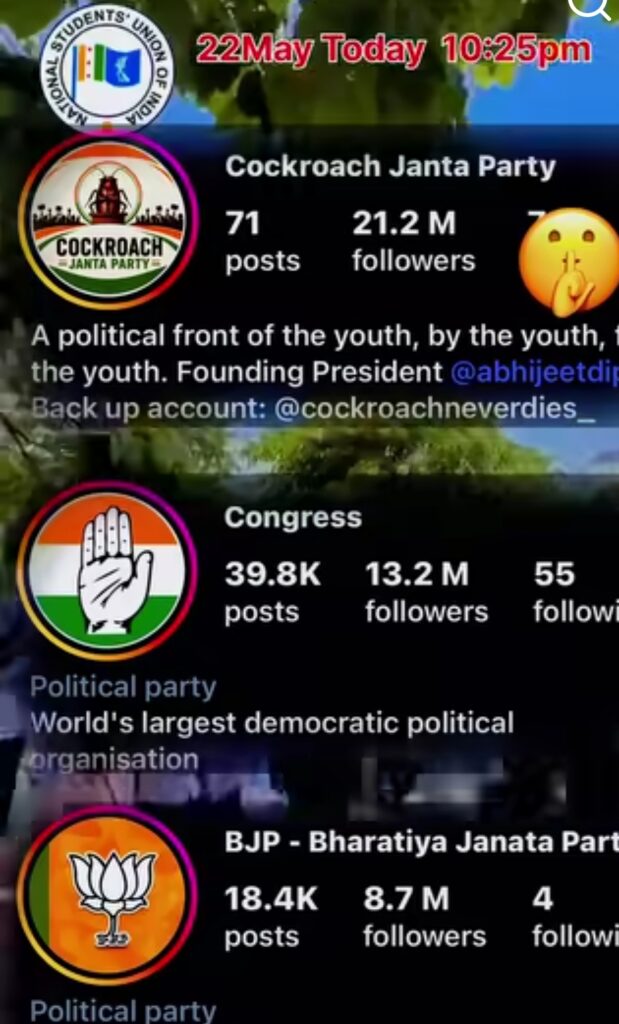
The rapid ascent of the Cockroach Janta Party has left traditional political machinery bewildered. Born just three weeks ago, the account’s explosive growth completely eclipsed India’s main political parties on Instagram:
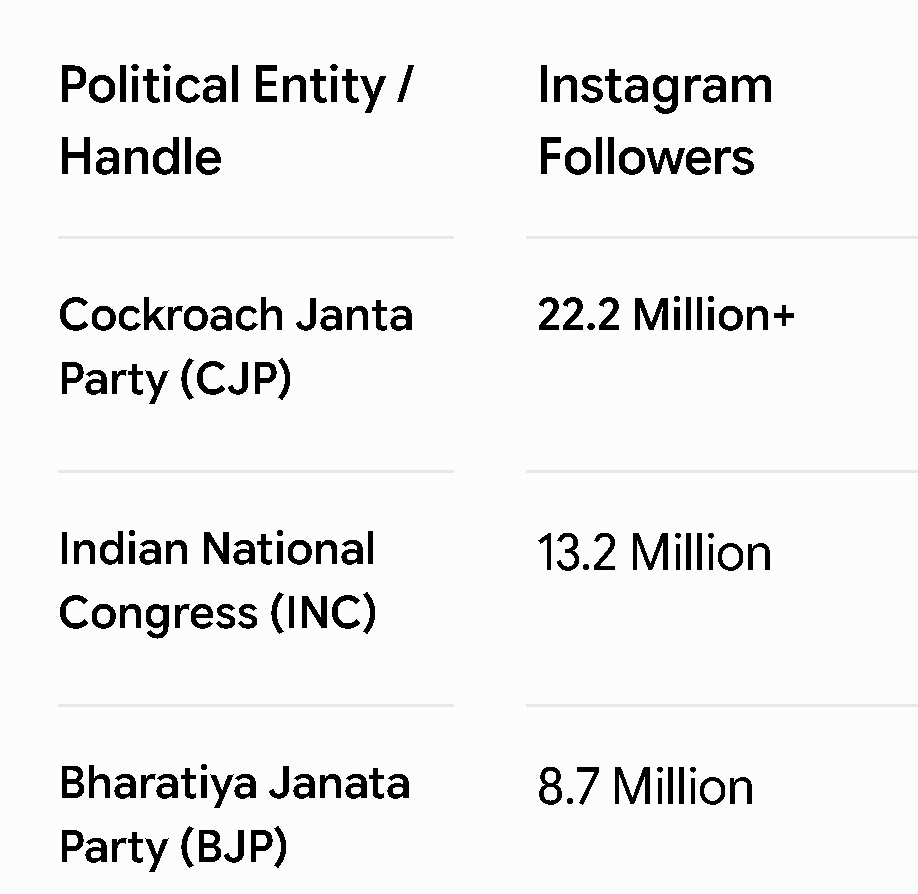
Despite boasting a digital army that exceeds the individual Instagram followings of both the BJP and Congress combined, the physical turnout at Jantar Mantar numbered in the hundreds rather than the anticipated thousands.
How an Alleged Judicial Insult Birthed a Movement
The party is the brainchild of Abhijeet Dipke, a political communications strategist and Boston University student. The movement was sparked last month after a controversial remark attributed to Supreme Court Justice Surya Kant, who reportedly likened persistent online critics and unemployed youth to “cockroaches” and “parasites” during a court hearing. (Justice Kant later clarified his remarks were taken out of context).
Seizing the moment, Dipke launched a parody political party with the Gen-Z friendly slogan: “A political front for the youth, by the youth, for the youth.” Using heavy satire, AI-generated imagery, and memes, the page rapidly channelled the genuine structural anxieties of young Indians facing rampant unemployment, economic uncertainty, and an education system plagued by structural irregularities.
Protest Highlights & Social Media Fallout
While the protest featured high-energy slogans such as “Cockroaches are coming, Dharmendra Pradhan is going!”, the aftermath of the rally has sparked a secondary wave of online controversy.
- The Textbook Protest: Organizers specifically asked participants to carry a schoolbook alongside the Indian national flag to symbolize the right to equal opportunity and education.
- The “Pookie” Green Flag Viral Moment: The protest wasn’t without its lighter viral moments. A video clip of a young man interviewing on-site, stating he only showed up to support his girlfriend after her stress over the NEET paper leak, took the internet by storm, with users swooning over his “green flag” energy.
- Civic Sense Backlash: Following the event, viral footage surfaced on platforms like X (formerly Twitter) showing the Jantar Mantar protest site heavily littered with discarded food plates, plastic wrappers, and trash. Critics were quick to lambast the movement, with hashtags like #IndiaRejectsCJP trending as users questioned the civic responsibility of a group claiming they want to reform society.
Vspro News Analysis: Can Algorithms Run A Country?
The Jantar Mantar rally serves as a fascinating case study in modern political science. It proves that social media algorithms can weaponize youth frustration to build a multi-million user following overnight.
0